

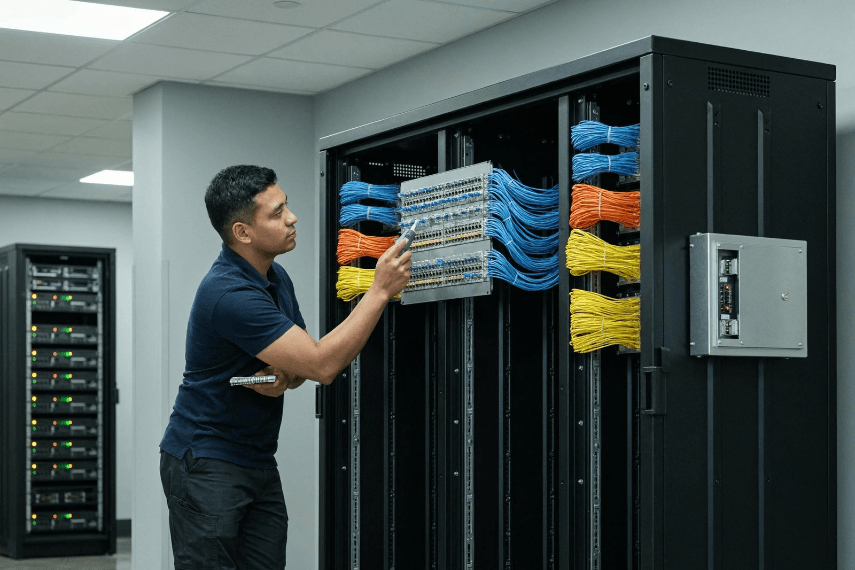
Modern businesses rely on stable network connections to manage communication, share information and keep daily operations running smoothly. From office computers and printers to security cameras, wireless access points and phone systems, multiple devices depend on a well-organised cabling infrastructure.
This is where structured cabling becomes important. It provides an organised approach to connecting different devices and communication systems through a unified network infrastructure. Whether setting up a new office or upgrading an existing commercial property, understanding structured cabling can help businesses make better decisions about their network requirements.
What Is Structured Cabling?
Structured cabling is a standardised system of cables, connectors, patch panels and other hardware used to support communication and data transmission within a building or commercial facility.
Unlike traditional cabling, where individual devices may have separate and unorganised connections, structured cabling follows a planned design. It creates a centralised infrastructure that connects computers, telephones, servers, security systems and other network-enabled equipment. A structured cabling system can support different communication requirements while making the network easier to manage, maintain and expand.
How Does a Structured Cabling System Work?
A structured cabling system connects various devices through an organised network of cables and connection points. These components work together to transfer data between devices and network equipment.
Some of its main components include:
Entrance Facilities: The point where external communication services enter the building and connect with internal network infrastructure.
Equipment Rooms: Dedicated spaces that house important network equipment, servers and communication hardware.
Backbone Cabling: Connects equipment rooms, telecommunications rooms and different areas of a building.
Horizontal Cabling: Runs from telecommunications rooms to individual work areas, providing network connections to devices.
Telecommunications Rooms: Spaces containing patch panels and network equipment that distribute connections throughout the building.
Work Area Components: Network outlets, connectors and patch cords used to connect computers, printers and other devices.
When these components are properly planned and installed, they create a reliable and organised network infrastructure.
Why Do Businesses Need Structured Cabling?
A well-designed cabling system offers several practical benefits for commercial environments.
1. Better Network Organisation
Unorganised cables can make it difficult to identify connections, troubleshoot problems and maintain network equipment. Structured cabling keeps connections properly arranged and labelled, helping IT teams manage the infrastructure more efficiently.
2. Improved Network Reliability
Businesses depend on consistent connectivity for everyday operations. A properly designed and installed cabling system helps provide stable connections between network devices and reduces problems associated with poorly managed infrastructure.
However, overall network performance also depends on cable quality, equipment, configuration and installation practices.
3. Easier Future Expansion
As businesses grow, they may need additional computers, workstations, security cameras and communication systems. Structured cabling makes it easier to add new connections without completely redesigning the existing infrastructure.
This flexibility can be particularly useful for expanding offices and commercial facilities.
4. Simplified Maintenance and Troubleshooting
When cables are clearly organised and labelled, technicians can identify connection points more easily. This makes it simpler to locate faults, replace damaged components and carry out routine maintenance.
5. Support for Multiple Communication Systems
Structured cabling can support various applications, including data networks, voice communication, wireless access points and IP-based security systems. This allows businesses to manage multiple communication requirements through a coordinated infrastructure.
What Should Businesses Consider Before Installing Structured Cabling?
Installing structured cabling requires proper planning. Businesses should consider their current requirements as well as their future operational needs.
Assess the Building Layout: Understand the office layout, equipment locations and distances between network connection points before deciding on the cabling design.
Identify Network Requirements: Consider the number of computers, servers, printers, wireless access points and other connected devices that will use the network.
Choose Suitable Cable Types: Different cable categories offer different performance capabilities. Cat6 and Cat6A are common options for commercial Ethernet installations, depending on bandwidth, distance and future requirements.
Plan for Future Growth: Allow sufficient capacity for additional connections and equipment so the infrastructure can accommodate business expansion.
Consider Professional Installation: Experienced commercial electrical contractors and data cabling specialists can help assess installation requirements, plan cable routes and ensure the infrastructure is installed appropriately.
An electrical site assessment can also help identify existing infrastructure, installation constraints and potential requirements before work begins.
Why Professional Structured Cabling Installation Matters
Structured cabling is an important part of commercial network infrastructure, and its performance depends on proper planning and installation.
Professional installers can evaluate the building layout, select suitable materials, organise cable pathways and test completed connections. They can also help ensure that the installation follows applicable industry standards and project requirements.
For businesses planning a new office, commercial renovation or network upgrade, working with experienced cabling professionals can help avoid unnecessary installation issues and support long-term network management.
At Elite Cabling Solutions WA, businesses can access professional structured cabling and commercial electrical services to support their connectivity and infrastructure requirements. A properly planned cabling system can provide a more organised foundation for everyday business operations and future growth.
Frequently Asked Questions (FAQs)
1. What is structured cabling used for?
Structured cabling is used to connect computers, servers, telephones, printers, wireless access points and other network devices through an organised communication infrastructure.
2. What is the difference between structured cabling and traditional cabling?
Structured cabling follows a standardised design with organised connection points and cable pathways. Traditional cabling often involves separate connections for individual devices, which can become difficult to manage as a network grows.
3. Which cables are commonly used in structured cabling systems?
Common options include Cat5e, Cat6 and Cat6A Ethernet cables, along with fibre optic cables. The appropriate choice depends on network speed, transmission distance and installation requirements.
4. Is structured cabling suitable for small businesses?
Yes. Small businesses can benefit from structured cabling because it provides organised connectivity, simplifies maintenance and allows additional network connections as the business expands.
5. Why should businesses hire professional structured cabling installers?
Professional installers can assess network requirements, plan cable routes, select suitable materials and test connections. This helps create an organised infrastructure that supports reliable network operations and future expansion.